
Nikon D70s Owners Manual: A Comprehensive Guide (Updated 04/28/2026)
Welcome! This comprehensive manual, updated today – 04/28/2026 – will guide you through every aspect of your Nikon D70s, ensuring optimal performance and enjoyment.
Congratulations on acquiring the Nikon D70s, a powerful and versatile digital SLR camera! This manual serves as your complete resource, designed to unlock the full potential of your new camera. We’ll explore its features, from initial setup to advanced photographic techniques.
The D70s offers a fantastic blend of performance and accessibility, making it ideal for both enthusiasts and those new to DSLR photography. This guide will help you navigate its controls and settings with confidence, allowing you to capture stunning images.
Unboxing and Initial Setup
Carefully unpack your Nikon D70s, ensuring all included accessories are present: camera body, lens, battery, charger, USB cable, and this manual. Insert the battery and memory card. Connect the camera to a computer via USB to verify connectivity.
Set the language, date, and time. Complete the initial setup wizard, configuring basic settings like image quality and autofocus mode. Familiarize yourself with the camera’s ports and buttons before proceeding to more advanced operations.
Understanding the Camera Body & Controls
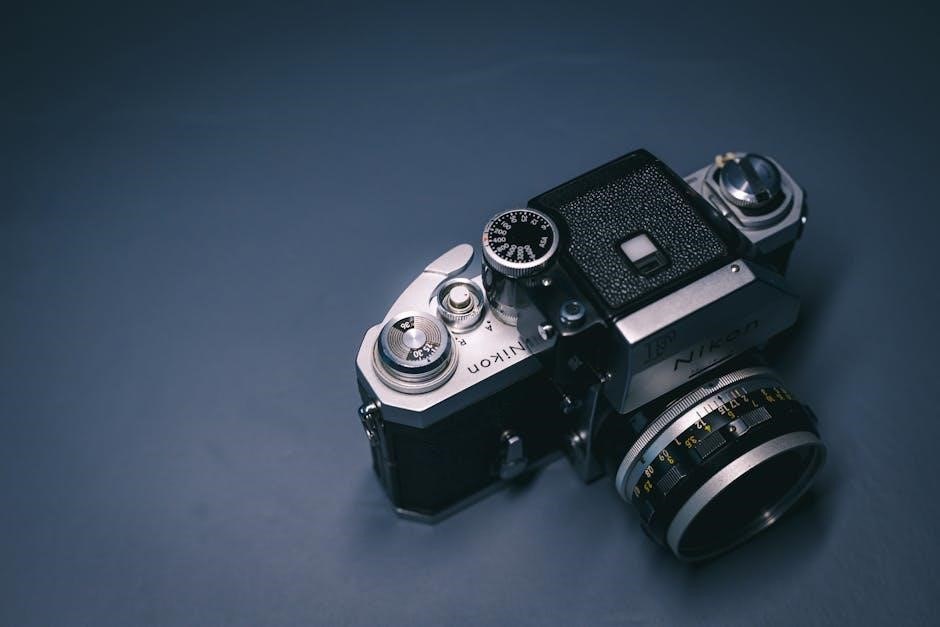
The Nikon D70s features a robust and ergonomic body designed for comfortable handling. Key components include the mode dial, shutter button, control dials, and LCD screen. Become familiar with the placement of these controls for efficient operation.
Explore the function buttons and their customizable options. Understanding the physical layout is crucial for quickly adjusting settings and capturing stunning images in various shooting scenarios.
Front and Rear Panel Overview
The front panel houses the lens mount, autofocus-assist illuminator, and depth-of-field preview button. The rear panel features the LCD screen, control dials, menu button, and playback controls.
Locate the diopter adjustment dial near the viewfinder for personalized clarity. Understanding the function of each button and dial on both panels is essential for navigating the camera’s settings and features effectively.
Top Panel Controls and Dials
The top panel is command central, featuring the mode dial for selecting shooting modes (Auto, P, S, A, M), the shutter release button, and the main command dial for adjusting settings.
The ISO button allows quick access to sensitivity settings, while the exposure compensation dial fine-tunes brightness. Familiarize yourself with these controls for seamless operation and creative control over your images.
Button Customization Options

The Nikon D70s offers extensive button customization via the Custom Setting menu. You can reassign functions to various buttons, tailoring the camera to your shooting style.
This allows for quicker access to frequently used features, enhancing efficiency. Explore the options to personalize your D70s, streamlining your workflow and maximizing creative control during every photographic opportunity.
Menu System Navigation
Navigating the Nikon D70s’s menu is crucial for unlocking its full potential. The menu is logically organized into Shooting, Custom Settings, and Setup menus.
Use the multi-selector and OK button to navigate and select options. Understanding the menu structure allows you to efficiently adjust camera settings, personalize functions, and optimize image quality for diverse shooting scenarios.
Shooting Menu Settings
The Shooting Menu controls core image capture parameters. Here, you’ll find options for Image Quality (RAW, JPEG), Image Size, ISO sensitivity, White Balance, and Metering Mode.
Adjusting these settings directly impacts your photos. Explore options like Active D-Lighting for improved dynamic range and Vibration Reduction for sharper images. Familiarize yourself with each setting to achieve desired results.
Custom Settings Menu Explained
The Custom Settings menu allows personalized camera operation. Fine-tune controls like autofocus behavior, metering tie-in with focus, and button assignments to match your shooting style.
Customize display settings, audio signals, and setup options for efficient workflow. Saving custom settings as presets enables quick recall for different shooting scenarios, boosting productivity and creative control.
Setup Menu – Personalizing Your D70s
The Setup menu is where you truly make the D70s your own. Adjust date/time, language, and display settings to your preferences. Configure file naming methods for easy organization and set up the built-in intervalometer for time-lapse photography.
Customize button functions and reset settings to factory defaults if needed. This menu ensures the camera operates precisely how you want it to.
Focusing Modes and Techniques
Achieving sharp images relies on mastering the D70s’ focusing system. Explore Autofocus Area Modes – Single, Dynamic, and Auto – to suit various subjects and shooting scenarios. Learn to utilize Manual Focus for precise control when autofocus struggles.
Discover techniques like Focus Lock and Focus Tracking to maintain sharpness on moving subjects, ensuring consistently clear and captivating photographs.
Autofocus Area Modes
The Nikon D70s offers versatile autofocus options. Single Area AF focuses on a chosen point, ideal for static subjects. Dynamic Area AF tracks moving subjects within the selected area. Auto Area AF lets the camera automatically select focus points – useful for unpredictable action.
Experiment with these modes to find what best suits your photographic style and subject matter, maximizing focus accuracy.
Manual Focus Operation
For precise control, the D70s allows manual focusing. Switch the focus mode on the camera body to ‘M’. Rotate the focusing ring on your lens until the subject appears sharp in the viewfinder or on the LCD screen.
Utilize Live View for magnified precision. Manual focus excels in low light or when autofocus struggles with challenging subjects, offering ultimate control.
Focus Lock and Focus Tracking
Focus lock enables you to separate focusing from shooting. Half-press the shutter button to lock focus on your subject, then recompose the shot without refocusing – ideal for off-center subjects.
The D70s doesn’t offer advanced tracking like newer models, but continuous autofocus (AF-C) attempts to follow moving subjects. Practice to master this feature’s limitations for optimal results.
Exposure Control: Aperture, Shutter Speed & ISO
Mastering exposure is key to great photography. The Nikon D70s offers full control over aperture, shutter speed, and ISO. Aperture controls depth of field, shutter speed affects motion blur, and ISO determines sensitivity to light.
Utilize Program, Aperture-Priority, Shutter-Priority, or Manual modes to tailor settings to your creative vision and shooting conditions, achieving perfectly exposed images consistently.
Aperture Priority Mode (A)
Aperture Priority (A) mode lets you select the f-stop, controlling depth of field – how much of your image is in focus. The camera automatically sets the shutter speed for proper exposure. Lower f-numbers (e.g., f/2.8) create shallow depth of field, ideal for portraits.
Higher f-numbers (e.g., f/16) yield greater depth of field, perfect for landscapes. Experiment to achieve your desired artistic effect with ease and precision.
Shutter Priority Mode (S)
Shutter Priority (S) mode empowers you to choose the shutter speed, controlling motion blur. Faster shutter speeds (e.g., 1/1000s) freeze action, while slower speeds (e.g., 1/30s) create motion blur. The camera automatically adjusts the aperture for correct exposure.
This mode is excellent for sports photography or capturing silky smooth water effects. Mastering shutter speed unlocks creative control over your images.
Manual Mode (M) and Exposure Compensation
Manual (M) mode grants complete control over both aperture and shutter speed, allowing for precise exposure settings. This is ideal for challenging lighting situations or achieving specific creative effects.
Exposure Compensation adjusts the meter’s reading in Aperture or Shutter Priority modes. Use it to brighten or darken images when the camera’s automatic metering isn’t quite right for your vision.
Metering Modes and Their Applications
The Nikon D70s offers three metering modes: Matrix, Center-weighted, and Spot. Matrix metering analyzes the entire scene for balanced exposure; Center-weighted prioritizes the center of the frame, useful for portraits.
Spot metering measures light from a very small area, perfect for tricky lighting or subjects against bright backgrounds. Understanding these modes is crucial for achieving properly exposed photographs in diverse conditions.
Matrix Metering
Matrix metering, Nikon’s signature technology, analyzes the entire frame using a 420-pixel RGB sensor. It then compares this data to a database of thousands of scenes to determine the optimal exposure. This makes it incredibly versatile for everyday photography, handling most situations with ease.
It’s the recommended default mode, providing balanced exposures in a wide range of lighting conditions, simplifying your shooting process.
Center-Weighted Metering
Center-weighted metering prioritizes the exposure based on the brightness of the central area of the frame, gradually decreasing sensitivity as you move towards the edges. This mode is particularly useful when your subject is centrally located and strongly backlit.
It’s ideal for portraits or subjects where accurate exposure in the center is crucial, offering more control than matrix metering in specific scenarios.
Spot Metering
Spot metering precisely measures the light from a very small area of the frame – approximately 2.5% – allowing for highly accurate exposure readings on specific subjects. This is invaluable when dealing with high-contrast scenes or subjects with challenging lighting conditions.
Carefully select your spot metering point for optimal results, ensuring it falls directly on your intended subject’s key area.
White Balance Settings
White balance ensures accurate color rendition in your photographs by compensating for different lighting conditions. The Nikon D70s offers a variety of preset options, including Daylight, Cloudy, Fluorescent, and Tungsten, to quickly match common light sources.
For unique situations, explore custom adjustments and Kelvin temperature control for precise color accuracy.
Preset White Balance Options
The D70s provides several convenient preset white balance options for quick and accurate color correction. These include Daylight, designed for sunny conditions; Cloudy, for softer, warmer tones; Fluorescent, correcting for artificial fluorescent lighting; and Tungsten, ideal for incandescent bulbs.
Experiment with these presets to achieve natural-looking colors without complex adjustments.
Custom White Balance Adjustment
For precise color accuracy, the Nikon D70s allows for custom white balance adjustments. Use a white or gray card under your specific lighting conditions, then navigate to the custom white balance setting in the menu. Follow the camera’s prompts to capture a reference image.
This ensures truly accurate color rendition in challenging situations.
Kelvin Temperature Adjustment
For ultimate control, the Nikon D70s offers Kelvin temperature adjustment within the white balance settings. This allows you to precisely dial in the color temperature, expressed in Kelvin (K), to match your scene’s lighting. Lower values create warmer tones, while higher values produce cooler tones.
Experiment to achieve desired color balance.
Image Quality Settings & File Formats
The D70s provides flexibility in image quality and file formats. Choose between RAW and JPEG, understanding that RAW captures all sensor data for maximum editing potential, while JPEG offers smaller file sizes with in-camera processing.
Adjust image size (MegaPixels) and compression levels to balance detail and storage space. Higher settings yield larger, more detailed files.
RAW vs. JPEG – Understanding the Differences
RAW files contain unprocessed data directly from the sensor, offering extensive post-processing flexibility for adjustments to white balance, exposure, and more, without quality loss. JPEG files are compressed and processed in-camera, resulting in smaller file sizes but limited editing capabilities.
RAW is ideal for serious photographers, while JPEG suits casual shooting and immediate sharing.
Image Size and Compression Options
The Nikon D70s offers various image size settings, from large (high resolution) to small (lower resolution), impacting file size and print quality. Compression options include Fine, Normal, and Basic for JPEGs, affecting file size versus image detail.
Larger sizes and Fine compression preserve maximum detail, while smaller sizes and Basic compression save storage space.
Using Flash with the Nikon D70s
The Nikon D70s features a built-in flash for illuminating scenes in low light or adding fill-in light. Flash modes include Auto, Red-Eye Reduction, Fill-Flash, and Manual. Explore these options for creative control.
Additionally, the D70s is compatible with Nikon’s SB-series external flashes, offering greater power, control, and advanced features like TTL and bounce flash capabilities.
Built-in Flash Features
The D70s’s integrated flash provides convenient illumination when natural light is insufficient. Auto Flash automatically determines if flash is needed, while Fill Flash adds light to brighten shadows in bright conditions.
Red-Eye Reduction minimizes the red-eye effect in portraits. Manual Flash allows full control over flash output. Adjust flash compensation for fine-tuning exposure, achieving perfectly lit images consistently.
External Flash Compatibility (SB-Series)
The Nikon D70s fully supports SB-Series Speedlights, unlocking advanced lighting capabilities. These flashes offer greater power, flexibility, and control compared to the built-in unit. TTL (Through-The-Lens) flash metering ensures accurate exposures automatically.
Utilize commander mode to wirelessly control multiple flashes. Explore features like high-speed sync and rear-curtain sync for creative effects. SB-Series flashes significantly enhance your photographic potential.
Battery Management and Power Saving Tips
Maximize your Nikon D70s shooting time with effective battery management. Always use a genuine Nikon EN-EL3a battery for optimal performance and safety. Enable Auto Power Off in the setup menu to conserve energy during inactivity.
Minimize LCD screen brightness and limit live view usage. Carrying a spare, fully charged battery is highly recommended, especially during extended shoots. Avoid extreme temperatures which can reduce battery life.
Troubleshooting Common Issues
Encountering problems? This section addresses frequent Nikon D70s issues. Error messages often indicate specific problems – consult the manual’s error code list for solutions. If images appear blurry, check focus settings and ensure sufficient light.
For slow autofocus, try different AF area modes. If the camera freezes, attempt a battery removal/reinsertion. Regularly check the SD card for write-protection or corruption.
Error Messages and Solutions
The Nikon D70s displays error codes to indicate specific malfunctions. “Err” often signals a card issue – try reformatting or a different card. “BLOCKED” means the shutter is blocked; check the settings.
“No Memory Card” requires card insertion or formatting. Consult the full error code list in the appendix for detailed troubleshooting. Resetting the camera to factory defaults can sometimes resolve persistent errors.
Dealing with Image Quality Problems
Soft images often indicate camera shake – use a faster shutter speed or a tripod. Noise increases with higher ISO settings; lower ISO when possible. Incorrect colors suggest white balance issues; try presets or custom adjustments;
Blurry photos can stem from improper focusing; verify focus mode and area. Regularly clean the lens to avoid dust or smudges affecting image clarity. Check image stabilization settings;
Lens Compatibility and Care
The Nikon D70s supports a wide range of Nikon F-mount lenses, including both older manual focus lenses and newer autofocus models. Always use Nikon-approved lenses for optimal performance. Protect your lenses from impacts and extreme temperatures.
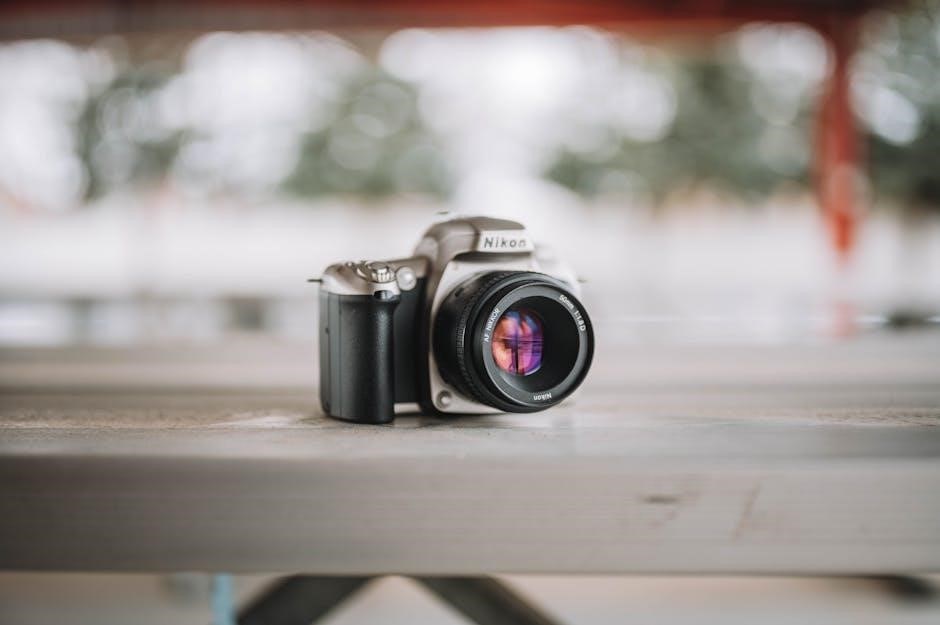
Regularly clean the lens surface with a microfiber cloth and lens cleaning solution. Avoid touching the glass elements with your fingers. Store lenses in a dry, dust-free environment when not in use.
Firmware Updates and Resources
Keep your Nikon D70s performing at its best by regularly checking for firmware updates on the official Nikon website. These updates often include bug fixes, performance enhancements, and new features. Download the latest version and follow the provided instructions carefully during installation.
Nikon’s website also offers extensive support resources, including FAQs, downloadable manuals, and access to the Nikon community forums for assistance.
Advanced Features: Picture Control System
Nikon’s Picture Control System allows for customized image rendering directly within the camera. Choose from Standard, Neutral, Vivid, Monochrome, and Portrait presets, or create your own custom settings by adjusting parameters like sharpness, contrast, brightness, and saturation.
Experiment with these controls to achieve your desired look without post-processing, offering creative flexibility and efficient workflow.
Data Transfer and Connectivity
Transferring images from your Nikon D70s is straightforward. Connect the camera to your computer using the supplied USB cable; it will appear as a removable drive. Alternatively, if equipped, utilize compatible Eye-Fi cards for wireless image transfer to your computer or online storage.
Ensure proper driver installation for seamless connectivity and efficient data management.
Connecting to a Computer
To connect your Nikon D70s to a computer, use the provided USB cable. Ensure the camera is powered off before connecting. Your computer should recognize the D70s as a removable disk drive, allowing you to easily transfer images and videos.
Install necessary drivers if prompted, and select the appropriate transfer mode for optimal speed and efficiency.
Using Eye-Fi Cards (if applicable)
If you are utilizing an Eye-Fi card with your Nikon D70s, insert it into the camera’s SD card slot. Ensure the card is formatted correctly and the Eye-Fi software is installed on your computer.
The card will automatically transmit images wirelessly to your designated computer when in range, simplifying your workflow.
Cleaning and Maintenance
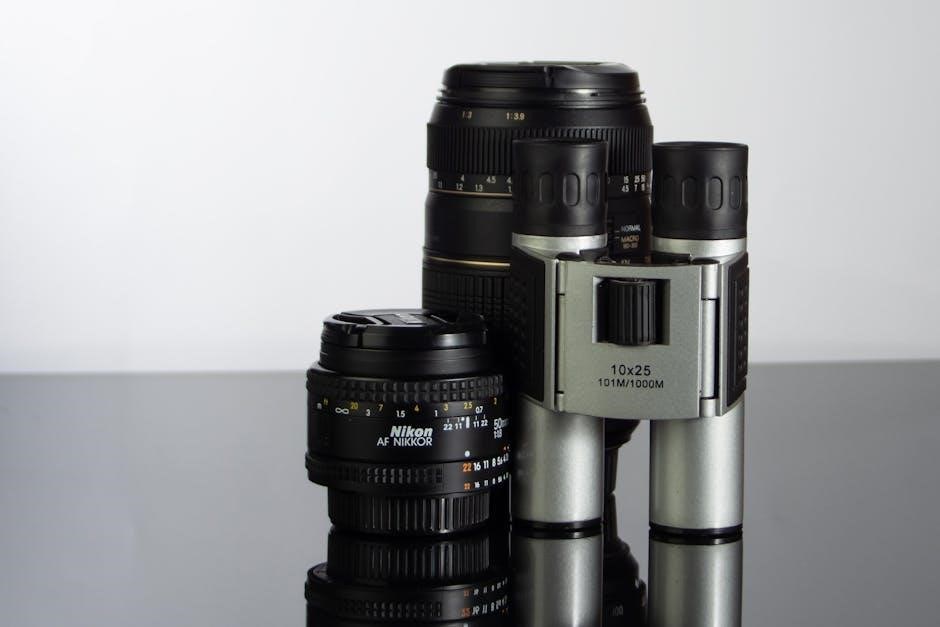
Regular cleaning preserves your Nikon D70s’ performance. Use a blower to remove dust from the sensor and a soft brush for the body. Avoid liquid cleaners directly on the camera; instead, dampen a microfiber cloth.

Periodically check and clean the lens contacts. Store your camera in a dry, dust-free environment when not in use to prevent damage.