Marie Callender Pumpkin Pie Instructions: A Comprehensive Guide
This guide provides detailed instructions for baking a delicious Marie Callender’s Pumpkin Pie, covering everything from preparation to troubleshooting, ensuring a perfect dessert experience.
Understanding the Pie
Marie Callender’s Pumpkin Pie is a frozen dessert designed for convenient baking. It features a pre-made, flaky crust filled with a classic pumpkin custard. The pie’s quality relies on proper baking, as the filling needs to set correctly and the crust must achieve a golden-brown color without burning.
Understanding the pie’s composition is key. The frozen state ensures freshness, but requires a gradual thawing and baking process. The filling contains pumpkin puree, spices (like cinnamon, ginger, and cloves), and binding agents to create its signature texture. The crust is formulated to withstand baking and provide a structural base.
Successful baking hinges on following the package instructions closely, paying attention to oven temperature and baking time. Variations in ovens may necessitate slight adjustments to achieve optimal results.
Checking Package Contents
Before beginning, carefully inspect the Marie Callender’s Pumpkin Pie packaging. Ensure the box is sealed and undamaged, indicating the pie hasn’t been compromised. Open the box and verify the presence of the frozen pumpkin pie itself. There shouldn’t be any visible damage to the pie’s packaging within the box – no tears or punctures.
Confirm that no additional inserts or promotional materials are missing if expected. While typically only containing the pie, checking for included baking tips or coupons is prudent.
Visually assess the pie through the clear packaging. The filling should appear frozen solid, and the crust should be intact. If the pie seems partially thawed or damaged, refrain from baking it and contact customer support.
Preheating the Oven
Proper oven preheating is crucial for evenly baking your Marie Callender’s Pumpkin Pie. Begin by setting your oven to the temperature specified on the pie’s packaging – typically around 350°F (175°C). Allow sufficient time for the oven to reach the correct temperature; a minimum of 15-20 minutes is recommended.
Using an oven thermometer is highly advisable to verify the internal temperature, as oven calibrations can vary. Ensure the oven rack is positioned in the center of the oven for optimal heat distribution.
Avoid opening the oven door frequently during preheating, as this can cause temperature fluctuations. A consistently heated oven guarantees a perfectly baked pie with a golden-brown crust and a set filling.
Baking Instructions ⎻ Standard Method
For the standard baking method, carefully place the frozen Marie Callender’s Pumpkin Pie directly onto the center rack of your preheated oven (350°F/175°C). Avoid placing the pie on a baking sheet unless specifically instructed, as this can hinder crust browning.
Baking time will vary, but generally, a standard-sized pie requires approximately 50-60 minutes. It’s essential to monitor the pie’s progress visually. The crust should be golden brown, and the filling should exhibit slight bubbling around the edges.
Resist the urge to open the oven door excessively during baking to maintain consistent temperature. A gentle wobble in the center of the filling is acceptable; it will set further during cooling.
Recommended Oven Temperature
The consistently recommended oven temperature for baking a Marie Callender’s Pumpkin Pie is 350°F (175°C). Maintaining this temperature is crucial for even cooking and preventing issues like a burnt crust or an underbaked filling. Preheating your oven thoroughly before placing the pie inside is equally important for optimal results.
Deviating from this temperature can significantly impact the pie’s texture and appearance. Lower temperatures may lead to a soggy crust, while higher temperatures risk burning. Ensure your oven is accurately calibrated for precise baking.
For best results, avoid opening the oven door frequently during baking, as temperature fluctuations can affect the pie’s setting process.
Baking Time Guidelines
Generally, a Marie Callender’s Pumpkin Pie requires approximately 50-60 minutes of baking time at 350°F (175°C). However, this is a guideline, and actual baking time can vary depending on your oven and its calibration. It’s essential to monitor the pie closely during the final stages of baking.
Begin checking for doneness around the 50-minute mark. Look for a slightly puffed and golden-brown crust, and a filling that appears set around the edges but still has a slight wobble in the center.
Avoid overbaking, as this can lead to a cracked or dry filling. A gentle jiggle in the center indicates it’s ready; it will continue to set as it cools.
Baking Instructions ⎻ Convection Oven
Utilizing a convection oven for your Marie Callender’s Pumpkin Pie can result in a more evenly baked pie with a flakier crust. However, adjustments to temperature and baking time are crucial for optimal results.
Convection ovens circulate hot air, leading to faster and more efficient baking. Therefore, reducing the baking temperature is recommended to prevent over-browning or a dry filling. Begin by lowering the temperature by 25°F (approximately 15°C) from the standard 350°F (175°C) to 325°F (160°C).
Monitor the pie closely, as convection ovens typically reduce baking time. Expect a shorter baking duration compared to a conventional oven, potentially around 40-50 minutes.
Adjusting Temperature for Convection
When baking a Marie Callender’s Pumpkin Pie in a convection oven, precise temperature adjustment is key to preventing a burnt crust or undercooked filling. Convection’s circulating air cooks food faster and more evenly than traditional ovens.
A general rule of thumb is to reduce the recommended baking temperature by 25°F (approximately 15°C). For a pie typically baked at 350°F (175°C), lower the convection oven setting to 325°F (160°C). This reduction helps maintain a consistent internal temperature and prevents excessive browning.
However, ovens vary, so monitoring is vital. Start with the 25°F reduction and observe the pie’s progress. If browning occurs too quickly, lower the temperature further in 10°F increments.
Reduced Baking Time with Convection
Utilizing a convection oven significantly reduces the baking time required for a Marie Callender’s Pumpkin Pie, thanks to the enhanced heat circulation. Expect a decrease of approximately 15-20% compared to traditional baking methods. While a standard bake might take 50-60 minutes, a convection oven could achieve the same result in 42-50 minutes.
However, this is an estimate; constant monitoring is crucial. Begin checking for doneness around the 40-minute mark. Insert a knife into the center of the filling – it should emerge mostly clean. Avoid relying solely on time, as oven variations exist.
Remember to adjust baking time based on visual cues and internal temperature readings for optimal results, ensuring a perfectly set and flavorful pumpkin pie.
Determining Doneness
Accurately assessing doneness is vital for a perfect Marie Callender’s Pumpkin Pie. Relying solely on baking time isn’t sufficient; visual cues and temperature checks are essential. A properly baked pie will exhibit a slightly puffed and golden-brown crust, with a firm, yet slightly jiggly, filling.
The filling should appear set around the edges, transitioning to a softer center. To confirm, gently shake the pie; minimal sloshing indicates readiness. For precise results, insert a thermometer into the center of the filling. A temperature reading of 175-180°F (80-82°C) signifies it’s fully baked.
Avoid overbaking, as this can lead to a cracked or dry pie.
Visual Cues for a Baked Pie
Observing visual changes is a key step in determining when your Marie Callender’s Pumpkin Pie is perfectly baked. The pie crust should transition to a beautiful, golden-brown color, indicating it’s fully cooked and crisp. Look for a slight puffing of the crust around the edges – this is a positive sign!
The filling itself will undergo noticeable changes. It will set around the perimeter, becoming firmer, while the center retains a slight jiggle. This gentle wobble is desirable; a completely firm filling suggests overbaking. Watch for the filling to appear matte rather than glossy, and for any cracks to be minimal.
A slight shrinkage from the pan’s edges is also normal as it cools.
Using a Thermometer
For precise baking, utilizing a food thermometer is highly recommended when preparing your Marie Callender’s Pumpkin Pie. Insert the thermometer into the center of the filling, avoiding contact with the crust. A properly baked pumpkin pie should reach an internal temperature between 160°F and 170°F (71°C ⎻ 77°C).
Begin checking the temperature around the recommended baking time, as oven temperatures can vary. If the pie hasn’t reached the target temperature, continue baking in 5-10 minute increments, rechecking each time.
Remember that carryover cooking will continue even after removing the pie from the oven, so slightly underbaking is preferable to overbaking.
Cooling and Serving
Once baked, allow the Marie Callender’s Pumpkin Pie to cool completely on a wire rack before serving – this typically takes 2-3 hours. Cooling allows the filling to set properly, preventing a runny consistency. Avoid placing the pie in the refrigerator immediately, as this can affect the texture.
For optimal flavor and texture, serve the pie at room temperature. A dollop of freshly whipped cream is a classic accompaniment, enhancing the pie’s rich, spiced flavor. Consider a sprinkle of cinnamon or nutmeg for an extra touch of warmth.
Leftover pie should be covered and refrigerated.
Storage Instructions
To maintain the quality of your Marie Callender’s Pumpkin Pie, proper storage is essential. Once cooled completely, loosely cover the pie with plastic wrap or aluminum foil. Avoid sealing it tightly, as this can make the crust soggy. Refrigerate the pie promptly to prevent spoilage.
Refrigerated pumpkin pie will generally stay fresh for 3-4 days. For longer storage, consider freezing. Wrap the pie tightly in plastic wrap, then in aluminum foil, and freeze for up to 2-3 months. Thaw overnight in the refrigerator before serving.
Always check for any signs of spoilage before consuming.
Troubleshooting Common Issues
Pie Crust Browning Too Quickly: If the crust browns excessively before the filling is set, cover the edges with aluminum foil during the latter half of baking. This shields the crust from direct heat, ensuring even baking. Reduce oven temperature slightly if the issue persists.
Filling Not Setting Properly: An unset filling often indicates insufficient baking time. Continue baking for an additional 10-15 minutes, checking for doneness with a knife inserted near the center. Ensure the oven temperature is accurate. If using a convection oven, adjust baking time accordingly.
For consistently successful results, follow the recommended baking times and temperatures closely.
Pie Crust Browning Too Quickly
A common issue when baking Marie Callender’s Pumpkin Pie is the crust browning faster than the filling sets. To prevent this, several techniques can be employed. Firstly, consider using a pie shield or creating one from aluminum foil, carefully covering the crust’s edges during the final 15-20 minutes of baking. This deflects heat and slows browning.
Alternatively, lowering the oven temperature by 25°F (approximately 15°C) can help regulate the baking process. Ensure the pie is placed on a middle rack for even heat distribution. Regularly monitor the crust’s color and adjust coverage as needed for a golden-brown finish.
Filling Not Setting Properly
If your Marie Callender’s Pumpkin Pie filling isn’t setting correctly, resulting in a wobbly center, several factors might be at play. Ensure the pie is baked for the full recommended time, and avoid opening the oven door frequently, as temperature fluctuations can hinder setting. A slightly underbaked pie will remain soft.
If the issue persists, gently shake the pie; a slight wobble in the center is acceptable, but excessive movement indicates it needs more time. Avoid overbaking, which can cause cracking. Allowing the pie to cool completely, even overnight in the refrigerator, will further firm up the filling.
Nutritional Information
Understanding the nutritional content of Marie Callender’s Pumpkin Pie allows for informed dietary choices. A standard serving (approximately 1/8 of the pie) typically contains around 320 calories, with 14 grams of total fat, including 8 grams of saturated fat. It also provides 42 grams of carbohydrates, with 28 grams as sugars.
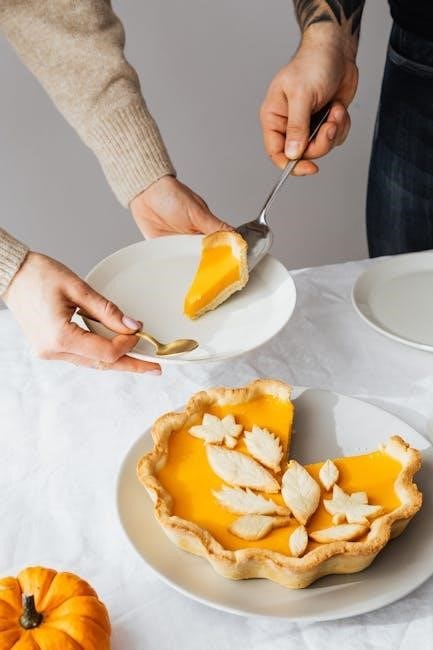
The pie contains 4 grams of protein and a moderate amount of sodium, around 230 milligrams per serving. These values can vary slightly depending on specific ingredients and portion sizes. For individuals monitoring their sugar or fat intake, mindful consumption is advised. Detailed nutritional facts are available on the pie’s packaging.
Ingredient List Overview
Marie Callender’s Pumpkin Pie boasts a classic flavor profile achieved through a carefully selected ingredient list. The filling prominently features pumpkin puree, providing the signature taste and vibrant color. Sugar, evaporated milk, and eggs contribute to the creamy texture and sweetness. A blend of spices – typically including cinnamon, ginger, nutmeg, and cloves – delivers the warm, autumnal aroma and flavor.
The flaky pie crust is composed of enriched flour, shortening, and butter, creating a tender and golden-brown base. Other ingredients may include corn syrup, modified food starch, and salt to enhance texture and preservation. Artificial flavors and colors might be present, depending on the specific product variation.
Allergen Information
Individuals with food allergies should carefully review the allergen information for Marie Callender’s Pumpkin Pie before consumption. This pie contains wheat due to the presence of flour in the crust, making it unsuitable for those with gluten sensitivities or celiac disease. Egg is a key ingredient in the filling, posing a risk for individuals with egg allergies.
Milk is present in both the filling (evaporated milk) and the crust (butter/shortening), making it unsuitable for those with dairy allergies. The pie may also contain trace amounts of soy due to ingredients used in processing. Always check the packaging for the most up-to-date and comprehensive allergen listing, as formulations can change.
Variations and Additions
Enhance your Marie Callender’s Pumpkin Pie with delightful variations! A classic pairing is a generous dollop of whipped cream topping – either store-bought or freshly made – adding a light and airy sweetness. For a warmer spice profile, consider adding spices like a pinch of nutmeg, ginger, or allspice to the filling before baking.
A sprinkle of cinnamon on top of the crust before baking offers a fragrant aroma and subtle flavor. Some enjoy a drizzle of caramel sauce or a scattering of chopped pecans for added texture and richness. Experiment with these additions to personalize your pie and create a truly memorable dessert experience!
Whipped Cream Topping
A dollop of perfectly whipped cream elevates Marie Callender’s Pumpkin Pie to new heights of indulgence. For a classic experience, use heavy whipping cream chilled thoroughly, then beat with powdered sugar and a touch of vanilla extract until soft peaks form. Avoid over-beating, as this can result in grainy cream.
Alternatively, stabilized whipped cream, achieved by adding a small amount of cornstarch or gelatin, holds its shape longer – ideal for presentation. Consider flavored whipped creams, such as cinnamon or maple, to complement the pumpkin spice. A piping bag with a decorative tip adds an elegant touch. Enjoy the creamy contrast with the rich pumpkin filling!
Adding Spices
While Marie Callender’s Pumpkin Pie is pre-seasoned, a subtle spice boost can personalize the flavor. Consider a dash of ground ginger, nutmeg, or allspice sprinkled over the filling before baking for enhanced warmth. Be cautious – a little goes a long way! Cinnamon is a classic addition, complementing the existing pumpkin spice blend beautifully.
For a more complex flavor profile, experiment with cardamom or cloves, but use sparingly to avoid overpowering the pumpkin. You can also create a spice blend and gently swirl it into the whipped cream topping. Remember to taste as you go, adjusting the spices to your preference for a truly customized pie experience.
Mellanox ConnectX Card Information (Related to System Monitoring ⎻ Potential Oven Control)
While seemingly unrelated to baking, Mellanox ConnectX network adapters, often used in high-performance computing, possess monitoring capabilities potentially adaptable for unconventional applications. The `mlxlink` tool allows interface status checks, crucial for system health. Accessing the Command Line Interface (CLI) via SSH or Telnet provides detailed adapter information. Commands like `lspci` identify ConnectX-3 or ConnectX-4 cards within the system.
Hypothetically, these monitoring features could be repurposed – with significant custom programming – to interface with oven control systems, monitoring temperature sensors and adjusting settings. However, this is a highly advanced and non-standard application, requiring substantial technical expertise and carries inherent risks.
Using `mlxlink` for Interface Status
The `mlxlink` utility, primarily designed for Mellanox ConnectX adapter diagnostics, can display detailed interface information. Executing `mlxlink -d device -m` reveals crucial data, including interface status (active/inactive), configured speeds, and potential troubleshooting indicators. This command is invaluable for verifying network connectivity, but its relevance to pumpkin pie baking is purely conceptual.
Imagine, hypothetically, adapting this monitoring capability to an oven’s temperature sensor; `mlxlink`’s status checks could theoretically be modified to report oven temperature readings. However, this requires extensive software development and is not a standard application. The tool supports various link types, offering comprehensive diagnostics for network infrastructure.
Accessing the CLI via SSH/Telnet
Similar to accessing the command-line interface (CLI) of a Mellanox adapter via SSH or Telnet for network configuration, imagine a hypothetical “Pie Control Interface.” This would allow remote monitoring and adjustment of baking parameters – a fanciful concept! MLNX-OS utilizes these protocols for direct console access, bypassing graphical interfaces.
Applying this to pumpkin pie, envision a smart oven accessible remotely. Through a secure shell (SSH), one could theoretically check baking progress or adjust temperature settings. However, Marie Callender’s pies are designed for conventional ovens, lacking this advanced connectivity. The CLI provides granular control over adapter settings, mirroring the precision a baker desires.
Identifying Mellanox Adapters with `lspci`
Just as the `lspci` command identifies Mellanox network adapters within a system, we can apply a similar “pie identification” process. Imagine scanning your pantry to identify the specific Marie Callender’s Pumpkin Pie you’ve purchased! `lspci` reveals details like adapter model (ConnectX-3, ConnectX-4, etc.), mirroring the pie’s packaging information – size, ingredients, and bake time suggestions.
Running `lspci | grep Mellanox` helps pinpoint network cards; similarly, checking the pie’s label confirms it’s a genuine Marie Callender’s product. Detailed output from `lspci` provides hardware specifics, analogous to examining the pie’s crust and filling for quality. This ensures you’re working with the correct “adapter” – the right pie – for a successful baking experience.
ConnectX-3 Adapter Identification
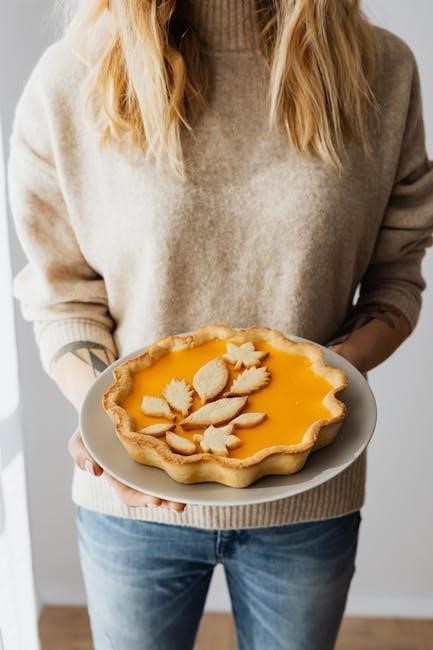
Identifying a ConnectX-3 adapter is akin to recognizing a classic Marie Callender’s Pumpkin Pie – a reliable, established choice. The `lspci` command output for a ConnectX-3 typically includes “MT27700 Family ConnectX-3” in the description. This is like spotting the familiar Marie Callender’s logo and the traditional pumpkin illustration on the box.
Just as knowing the adapter’s capabilities is crucial for network performance, understanding the pie’s baking instructions is vital for a perfect dessert. The ConnectX-3 represents a foundational technology; similarly, this pie embodies a classic recipe. Confirming the adapter’s presence ensures network connectivity, while verifying the pie’s details guarantees a delicious outcome. Both require careful observation and confirmation!
ConnectX-4 Adapter Identification
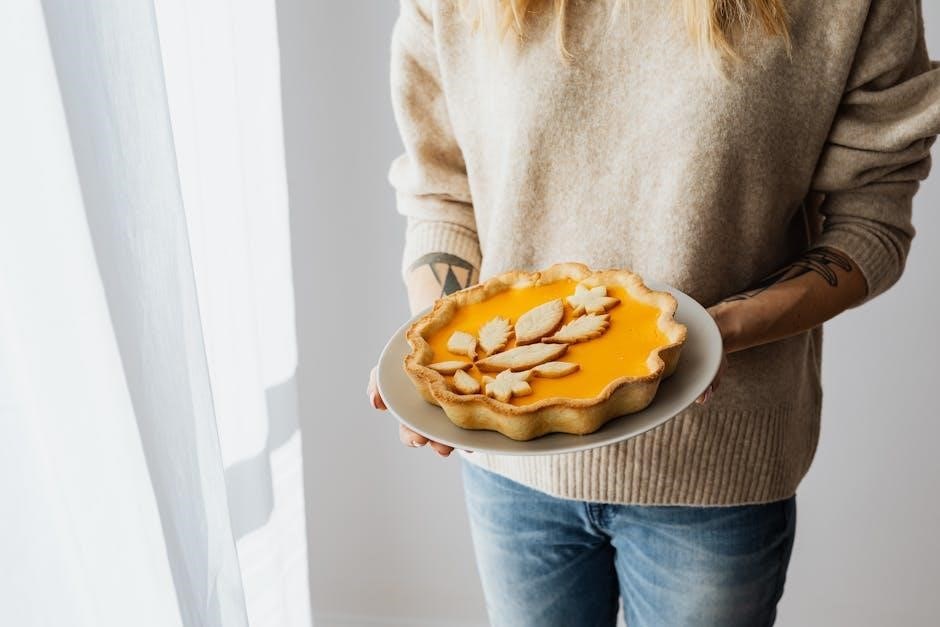
Identifying a ConnectX-4 adapter, much like anticipating the first bite of a Marie Callender’s Pumpkin Pie, requires a specific look. Using `lspci`, the output will generally display “Mellanox Technologies MT27700 Family ConnectX-4”. This is your key indicator, similar to recognizing the golden-brown crust of a perfectly baked pie.
Just as a ConnectX-4 offers enhanced performance, a Marie Callender’s Pumpkin Pie delivers consistent quality. Confirming the adapter’s presence ensures optimal network speed, while verifying the pie’s ingredients guarantees a delightful taste. Both demand attention to detail. The ConnectX-4 represents an upgrade, much like enjoying a slice with a dollop of whipped cream – a refined experience!
Downloading Mellanox Drivers
Just as ensuring your oven is properly calibrated is crucial for a perfect Marie Callender’s Pumpkin Pie, having the correct drivers is vital for Mellanox ConnectX adapters. For Linux systems, the latest drivers for ConnectX-3, ConnectX-3 Pro, ConnectX-4, ConnectX-4 Lx, ConnectX-5, ConnectX-5 Ex, ConnectX-6, and ConnectX-6 Dx Ethernet cards are readily available online.
Think of these drivers as the essential recipe for your network connection, guaranteeing smooth operation. A missing ingredient can ruin a pie; outdated drivers can hinder performance. Downloading from the official Mellanox website ensures you receive reliable, up-to-date software, much like using fresh pumpkin puree for optimal flavor. Proper installation is key for a seamless experience!